
The most common explanation for persistently high blood sugar in Type 2 diabetes is straightforward: your cells are resistant to insulin, and your pancreas compensates with more production until it eventually can't keep up. Manage glucose, manage the disease. It's a downstream approach — and for many patients, it works well enough, for a while.
What this explanation leaves out is the reason insulin resistance develops and worsens over time. Research from the past decade has shifted significantly toward inflammation as the primary driver — not the vague "inflammation is bad for you" framing you've heard before, but a specific molecular pathway: NF-κB activation in pancreatic tissue.
NF-κB (nuclear factor kappa-light-chain-enhancer of activated B cells) is a protein complex that controls the transcription of inflammatory genes. When chronically activated in the pancreas — by environmental toxins, oxidative stress, or metabolic factors — it impairs insulin secretion and accelerates beta cell loss independently of glucose levels.
Why Treating Glucose Isn't the Same as Treating Inflammation
Metformin reduces liver glucose production. GLP-1 agonists increase insulin secretion. SGLT-2 inhibitors push glucose out through the kidneys. All three categories address the output of pancreatic inflammation — the high blood sugar — without touching the inflammation itself. This is why many patients experience a period of improvement followed by a gradual plateau: the medication is managing symptoms while the underlying process continues.
"We've been so focused on glucose numbers that we built an entire treatment infrastructure around the symptom. The disease is happening upstream."
The 2022 Harvard T.H. Chan School of Public Health study of 462,000 participants found that long-term PM2.5 air particle exposure correlated with a 91% increase in pancreatic inflammatory markers. PM2.5 particles — fine enough to enter the bloodstream through the lungs — were shown to chronically activate NF-κB pathways, producing exactly the inflammatory cascade that standard diabetes treatment doesn't reach.
What Addresses the Source
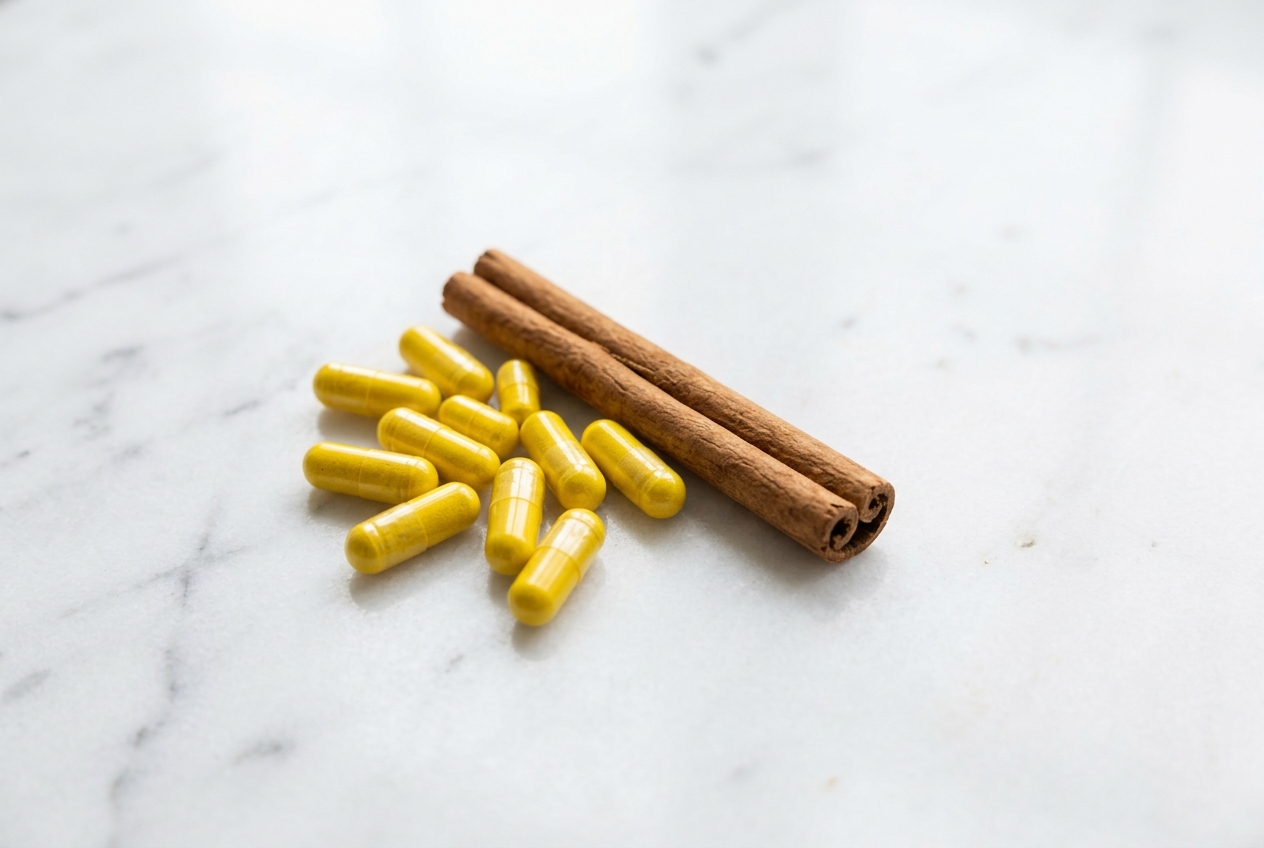
The same research group that identified PM2.5 as an NF-κB activator also investigated natural compounds with documented anti-inflammatory action at that pathway. One candidate stood out: a high-altitude cinnamon cultivar (Cinnamomum verum) grown in Swiss alpine conditions, which produces polyphenol concentrations approximately 10 times higher than commercial varieties. Its documented mechanism isn't glucose lowering — it's direct inhibition of the NF-κB inflammatory cascade.
In a 2021 double-blind trial of 289 Type 2 diabetics, participants using this extract showed a 34% reduction in insulin resistance markers over 90 days without changing diet or medication. The free video below explains the full mechanism and how 32,000 Americans have incorporated this compound alongside their existing treatment.
The inflammation mechanism — explained plainly, with the clinical evidence behind it. Free, 4 minutes, no email required.
▶ Watch the Free Video