You’re tracking your glucose. You’ve adjusted your diet — cut the obvious culprits, added the recommended foods. But every time you finish a meal, you watch the number rise. Sometimes sharply. The food you chose was the right food, and the spike happened anyway. The question nobody is asking at the appointment is: what order did you eat it in?
Researchers have been investigating meal sequencing — the order in which different food types are consumed during a meal — since at least 2011. The most recent evidence, published in 2026, is the most comprehensive yet: a systematic review and meta-analysis that included 17 randomized studies and 389 participants, all with type 2 diabetes. The finding was consistent across every study in the analysis.
The Study That Changed How Researchers Think About Meal Planning
The meta-analysis found that eating carbohydrates last — after vegetables and protein — was associated with significantly lower post-meal blood glucose levels across all 17 studies. The magnitude of the effect varied, but the direction never did. In some studies, participants who ate vegetables and protein before carbohydrates showed post-meal glucose levels up to 73% lower at 30 minutes and 37% lower at 60 minutes, compared to when the same meal was eaten with carbohydrates first. The insulin response was reduced by up to 48%.
17 randomized studies. 389 participants with type 2 diabetes. The same conclusion every time: carbohydrates eaten last = significantly lower post-meal blood glucose. Same foods. Same portion sizes. Different sequence. Consistently different result.
This is not a marginal effect. A 73% reduction in post-meal glucose spike — achieved without changing a single item on the plate, without medication adjustment, without portion restriction — is clinically meaningful. It changes the trajectory of A1C accumulation over months and years.
Why the Order Matters: The Fiber Barrier Mechanism
The mechanism behind this effect has been studied in detail. When fiber-rich vegetables are consumed first, the soluble fiber they contain begins hydrating and expanding in the stomach and small intestine. By the time the fiber reaches the intestinal lining, it has formed a viscous gel — a physical coating that sits between digestive enzymes and whatever food arrives afterward.
“The fiber gets there first. It lines the intestinal wall. By the time the carbohydrates arrive, the rate of absorption has already been slowed — not by medication, not by portion control, but by sequence.”
When carbohydrates arrive into this environment, the enzyme activity required to break starch into glucose is slowed by the gel layer. Less starch is broken down per unit of time. Less glucose enters the bloodstream per unit of time. The spike is lower, and it is lower regardless of what kind of carbohydrates were eaten or how many. The mechanism is physical, not nutritional — it doesn’t depend on choosing low-glycemic carbohydrates. It depends only on what arrived in the gut first.
Protein contributes a separate mechanism: it stimulates the release of peptide YY and GLP-1, hormones that slow gastric emptying — delaying how quickly food moves from the stomach into the small intestine where glucose absorption occurs. Eating protein before carbohydrates creates a pharmacological delay at the source, before the fiber barrier even comes into play.
What This Means for People Already Managing Diabetes
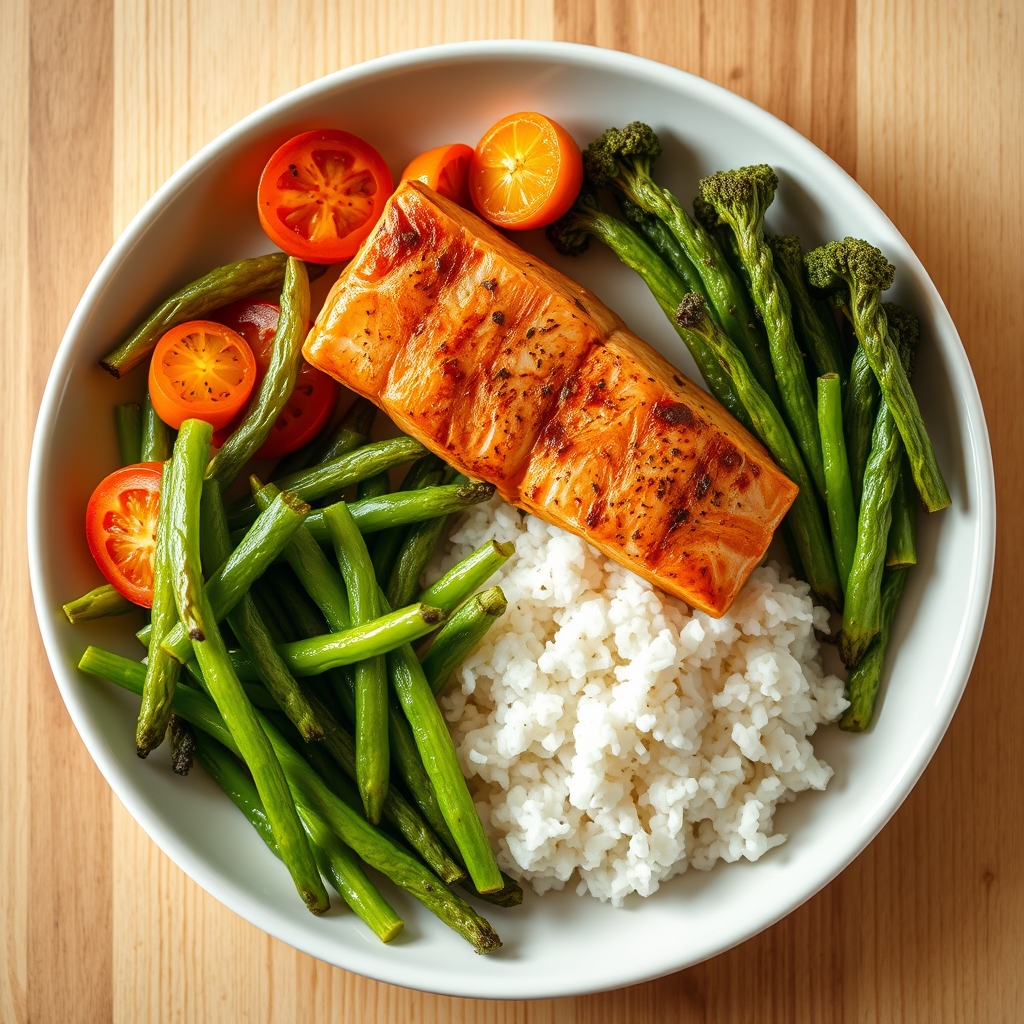
For someone managing type 2 diabetes, the practical implication is straightforward: start every meal with non-starchy vegetables, move to protein, and finish with carbohydrates. The intervention requires no new foods, no elimination of existing foods, no calorie counting, and no additional cost.
The effect compounds. If post-meal glucose spikes are consistently 40–73% lower at each meal, the area under the glucose curve — the total glucose exposure that drives A1C — is meaningfully reduced over weeks and months. Researchers studying the long-term effects of meal sequencing in people with type 2 diabetes have observed improvements in fasting glucose and HbA1c in studies ranging from 4 weeks to 3 months.
The Limitation Researchers Are Honest About
The evidence for food sequencing is real and consistent, but researchers studying it have been clear about its scope. The mechanism acts at the gut-absorption level: it slows how fast glucose enters the bloodstream after a meal. It does not address what happens to glucose once it’s in the bloodstream — specifically, how effectively insulin receptors on cells respond to it, or how efficiently glucose transporters move it out of circulation and into muscle tissue.
In type 2 diabetes, the problem is not only how fast glucose arrives. It is also how effectively the cells respond to insulin’s signal to take that glucose in. Insulin resistance — the reduced sensitivity of cell receptors to insulin — is the underlying mechanism that persists even when absorption is slowed. A person with significant insulin resistance will still experience elevated post-meal glucose even with perfect meal sequencing, because the glucose that does reach the bloodstream cannot be cleared efficiently.
Researchers investigating the insulin receptor sensitivity pathway — specifically, which natural compounds restore cellular responsiveness to insulin independent of diet — have identified compounds that act on this downstream mechanism. The mechanism, and what 32,000 people found when they incorporated this approach alongside dietary interventions like meal sequencing, is covered in the free video below.
The cellular mechanism that food sequencing doesn’t reach — explained in plain language. Free, 4 minutes, no email required.
▶ Watch the Free Video